
Timemore Chestnut C3S Pro Manual Coffee Grinder
A stainless steel conical burr coffee grinder with 36 grind settings, a solid pick for dialling in espresso and filter coffee at home.
Burr and blade are the two types of coffee grinder, and the difference is the single biggest factor in grind quality. This guide explains how they differ, why burr wins, and when blade is acceptable.
Burr grinders win, clearly. They crush beans to a uniform size for even extraction and better taste, while blade grinders chop randomly into dust and boulders that brew unevenly. For anyone who cares about their coffee, a burr grinder - even a cheap one - is the right choice. A blade grinder is only acceptable as the cheapest possible stopgap, or for grinding spices.
A burr grinder uses two abrasive burrs (conical or flat) set a precise distance apart, crushing beans to a consistent size as they pass through. You set the gap to control the grind. This uniform particle size is what gives even extraction, balanced flavour and the ability to dial in for different brew methods - the foundation of good coffee.
A blade grinder chops beans with a spinning blade, like a mini propeller, until you stop it. The result is random and uneven: a mix of fine dust and large chunks. Grind 'size' is only controlled by how long you run it, with no real consistency. That unevenness means some coffee over-extracts (bitter) while some under-extracts (sour) in the same cup.
Even extraction depends on uniform particle size. With consistent burr grounds, all the coffee extracts at a similar rate for a balanced cup. With uneven blade grounds, you get bitterness and sourness at once, plus sludge from the dust. This is why a burr grinder transforms coffee more than almost any other upgrade, including a better machine.
A blade grinder is acceptable only as a rock-bottom budget stopgap to grind fresher than pre-ground, or for grinding spices, where consistency matters less. If coffee quality matters at all, though, even an inexpensive manual burr grinder is a far better buy. The price gap between a blade and an entry burr grinder is small for the quality jump it brings.
A stainless steel conical burr coffee grinder with 36 grind settings, a solid pick for dialling in espresso and filter coffee at home.
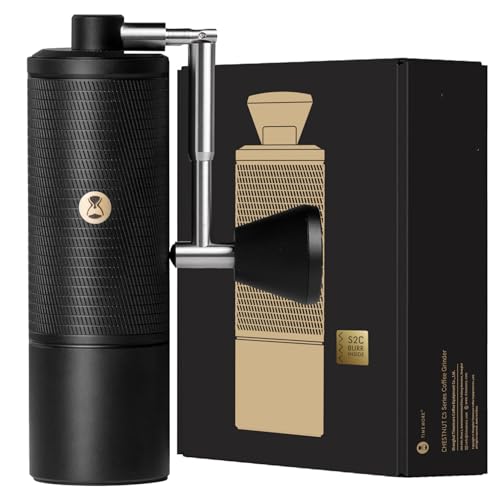
A stainless steel conical burr coffee grinder with 48 grind settings, a solid pick for dialling in espresso and filter coffee at home.

A burr coffee grinder, a solid pick for dialling in espresso and filter coffee at home.
A stainless steel conical burr coffee grinder with 50 grind settings, a solid pick for dialling in espresso and filter coffee at home.

A stainless steel conical burr coffee grinder with 36 grind settings, a solid pick for dialling in espresso and filter coffee at home.

A stainless steel conical burr coffee grinder, a solid pick for dialling in espresso and filter coffee at home.
A burr grinder, clearly. It crushes beans to a uniform size for even extraction and better taste, while a blade grinder chops unevenly into dust and boulders. Even a cheap burr grinder beats an expensive blade grinder for coffee.
Because they produce a consistent, uniform grind, which gives even extraction and balanced flavour. Blade grinders chop randomly, causing bitterness and sourness at once plus sludge, no matter how long you run them.
Only as a rock-bottom budget stopgap to grind fresher than pre-ground, or for spices. If coffee quality matters, an inexpensive manual burr grinder is a far better buy for a small extra outlay.
Our top pick is the Timemore Chestnut C3S Pro Manual Coffee Grinder (our score 9.6/10) - A stainless steel conical burr coffee grinder with 36 grind settings, a solid pick for dialling in espresso and filter coffee at home..